Partial QChips functionality lets you run automated patch clamp experiments more flexibly, using only the wells you need
Researchers shouldn’t have to choose between flexibility and throughput. High throughput enables faster data generation, quicker decision-making, and more efficient screening, but not every experiment requires a full 384-well run. With Partial QChips on Qube 384, researchers can tailor experiments to their needs, reduce consumable waste, and optimize QChip usage while maintaining full performance, throughput, and ease of use.
Partial QChips solve a common high-throughput challenge
High-throughput automated patch clamp (APC) platforms are designed for scale and efficiency, but not every experiment requires a full 384-well run. In ion channel research, adaptability is important, especially in APC workflows where experimental needs vary from run to run. For many researchers, especially during assay development or early-stage compound screening, running an entire QChip can feel excessive, costly, or simply impractical.
A chemist may synthesize only a small number of new compounds each time. Waiting until enough compounds are available to justify a full 384-well experiment can slow decision-making and delay progress. At the same time, running a full QChip for a smaller experiment can lead to underused capacity and unnecessary consumable costs.
For some labs, a more adaptable way to match experimental scale with actual experiment is needed – without sacrificing data quality, workflow simplicity, or system robustness.

For many researchers, running an entire QChip can feel excessive, costly, or impractical.
Partial QChips deliver scalable and flexible experimentation
With the new Partial QChips functionality in Qube 384 Mk III, researchers can now run experiments using only the number of wells they need. Instead of consuming an entire 384-well QChip in a single run, users can start with as few as 96 wells and scale usage in increments of 32 wells, depending on experimental requirements. This gives scientists the flexibility to optimize QChip usage for assay development, screening, and characterization workflows.
Importantly, unused wells are not wasted. Remaining capacity on a partially used QChip can be stored and reused in future experiments. The Qube system intelligently tracks which columns have already been used and automatically continues from the next available section of the QChip. Researchers can maintain the same simple workflow they are already familiar with, without additional manual tracking or setup complexity.
In the Qube software, you get a clear overview of partially used QChips, including remaining capacity and storage age, helping labs manage QChip consumables more efficiently and confidently.
Why Partial QChips are valuable for scientists
"Partial QChips give researchers greater flexibility in how they design and execute experiments."
By aligning QChip usage with experimental scale, labs can significantly improve consumable efficiency and reduce unnecessary waste. This lowers the cost per usable data point while allowing teams to balance throughput, budgets, and timelines more effectively. The new functionality is especially valuable for assay development teams and in smaller-scale screening workflows where adaptability is essential. Researchers gain the ability to test compounds when they are ready instead of waiting to fill an entire QChip.
Beyond operational efficiency, Partial QChips also create confidence. Scientists can make smarter decisions about resource allocation while feeling supported by an APC system that adapts to their workflow, not the other way around.
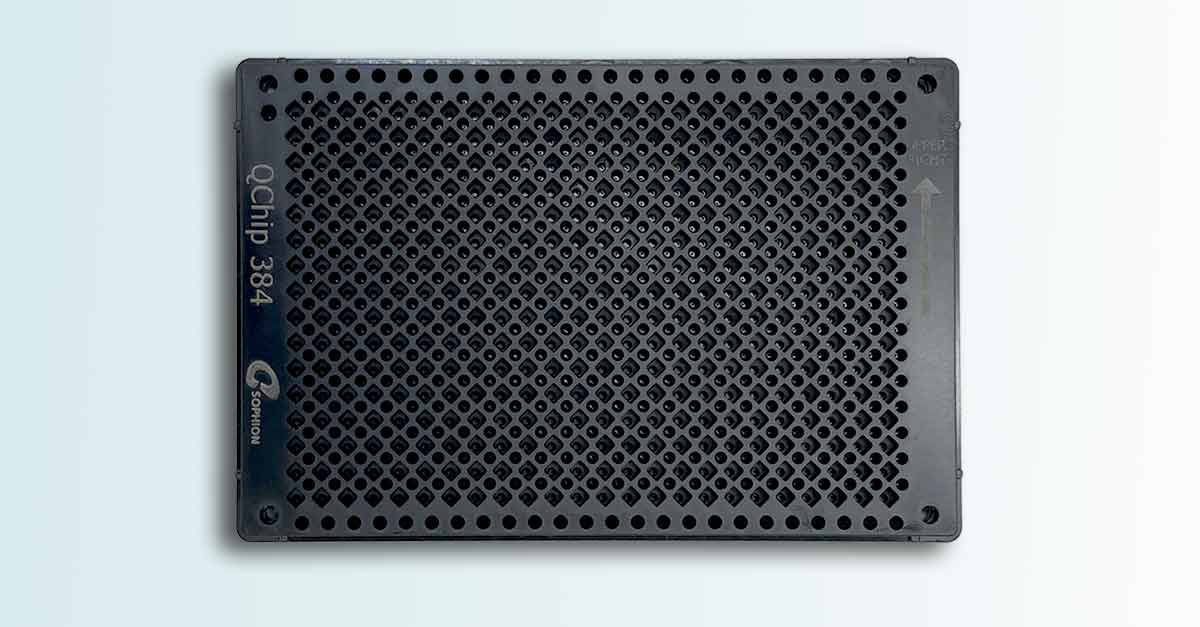
The QChip lets you run experiments more flexibly, using only the wells you need.
Flexible throughput without compromise
Partial QChips strengthen the flexibility of the Qube 384 Mk III platform while maintaining the performance, reliability, and ease of use researchers expect from Sophion systems. The result is scalable throughput without the traditional “all-or-nothing” tradeoff often associated with high-capacity electrophysiology platforms.
Whether you are optimizing assays, screening new compounds, or managing consumable budgets more strategically, Partial QChips on Qube 384 help you make better use of every experiment.
Are you ready to optimize your workflow?
Discover how Partial QChips on Qube 384 Mk III can help your team reduce waste, improve flexibility, and accelerate decision-making. Contact Sophion to book a meeting and learn more about the new availabilities in Qube 384.